
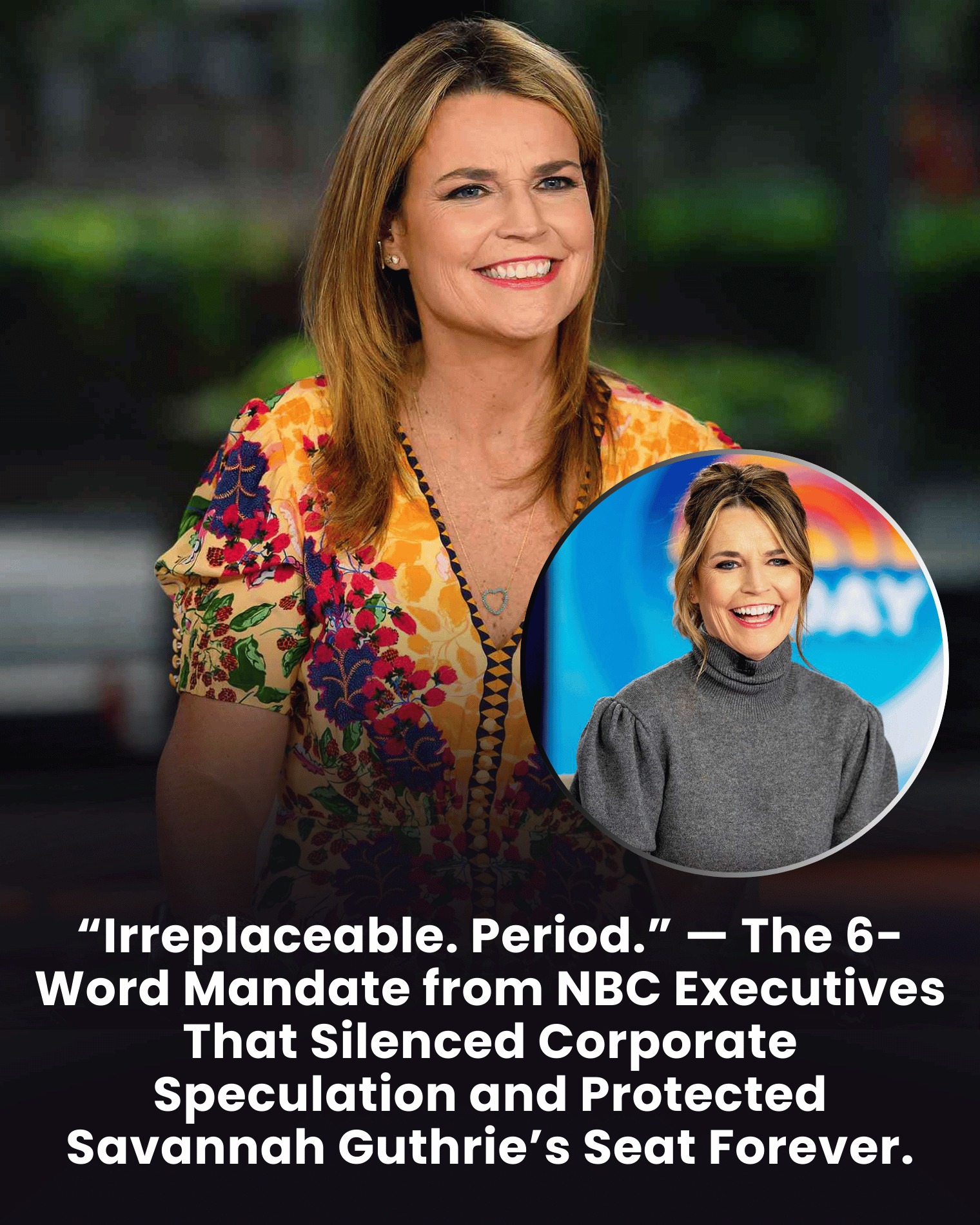
"Irreplaceable. Period."
Inside the high-stakes ecosystem of morning television, those words are almost unheard of. Ratings shift weekly. Contracts are dissected quarterly. Absences — even brief ones — often ignite speculation about permanent replacements waiting in the wings. Yet when it came to Savannah Guthrie, NBC executives reportedly delivered a six-word mandate that silenced the usual corporate whispers.
She wasn't just another anchor. She was the centerpiece.
At most major networks, a month-long absence can trigger a quiet reshuffling. Guest hosts are tested. Agents begin making discreet calls. Producers prepare contingency plans framed as "temporary adjustments." Morning news, particularly flagship programs like Today, operates on rhythm and familiarity. The audience expects stability. Any disruption risks unsettling both viewers and advertisers.
But insiders suggest that the internal memo regarding Guthrie struck a dramatically different tone. Rather than positioning her leave as a gap to be filled, leadership reportedly emphasized patience. She would have an open-ended runway. No countdown clock. No strategic auditioning of successors disguised as substitutes.
The message was clear: her chair would remain hers.
Such gestures are rare in broadcast journalism, an industry often governed by immediacy. Anchors are expected to project steadiness regardless of personal turbulence. The cameras do not wait for healing. Yet in this case, corporate calculus appeared secondary to loyalty.
Guthrie's tenure helps explain why.
Over more than a decade at the Today desk, she has conducted presidential interviews, moderated town halls, and navigated national crises live on air. Her style balances legal precision — shaped by her early career as an attorney — with an approachable warmth that resonates with morning audiences. She has anchored breaking news from election nights to global emergencies without losing composure.
In doing so, she has become part of viewers' daily rituals. Morning television thrives on familiarity; faces become fixtures in households across the country. Removing that presence abruptly would feel less like a programming tweak and more like a rupture.
Sources close to the network describe the decision as both strategic and human. Protecting Guthrie's position ensures continuity when she returns. It also signals to staff that long-term dedication is recognized, not transactional. In an era when media companies face constant restructuring, that kind of assurance carries weight.
There is also a broader cultural undertone. High-profile women in media have historically faced harsher scrutiny over absences than their male counterparts. Career pauses often invite disproportionate speculation about permanence. By declaring her "untouchable," NBC effectively short-circuited that narrative before it could metastasize.
For Guthrie, the guarantee reportedly provides peace of mind. When she chooses to step back into Studio 1A, she won't need to negotiate her relevance. She won't need to reclaim ground from internal challengers. The seat will not have been quietly reassigned.
In the cutthroat world of broadcast news, loyalty can be fleeting. Ratings fluctuate. Leadership changes. But occasionally, an institution decides that continuity matters more than churn.
"Irreplaceable. Period." is more than praise. It is policy.
And when Savannah Guthrie finally walks back under the studio lights, she will do so not as someone who survived speculation — but as someone whose value was never placed on the auction block in the first place.