
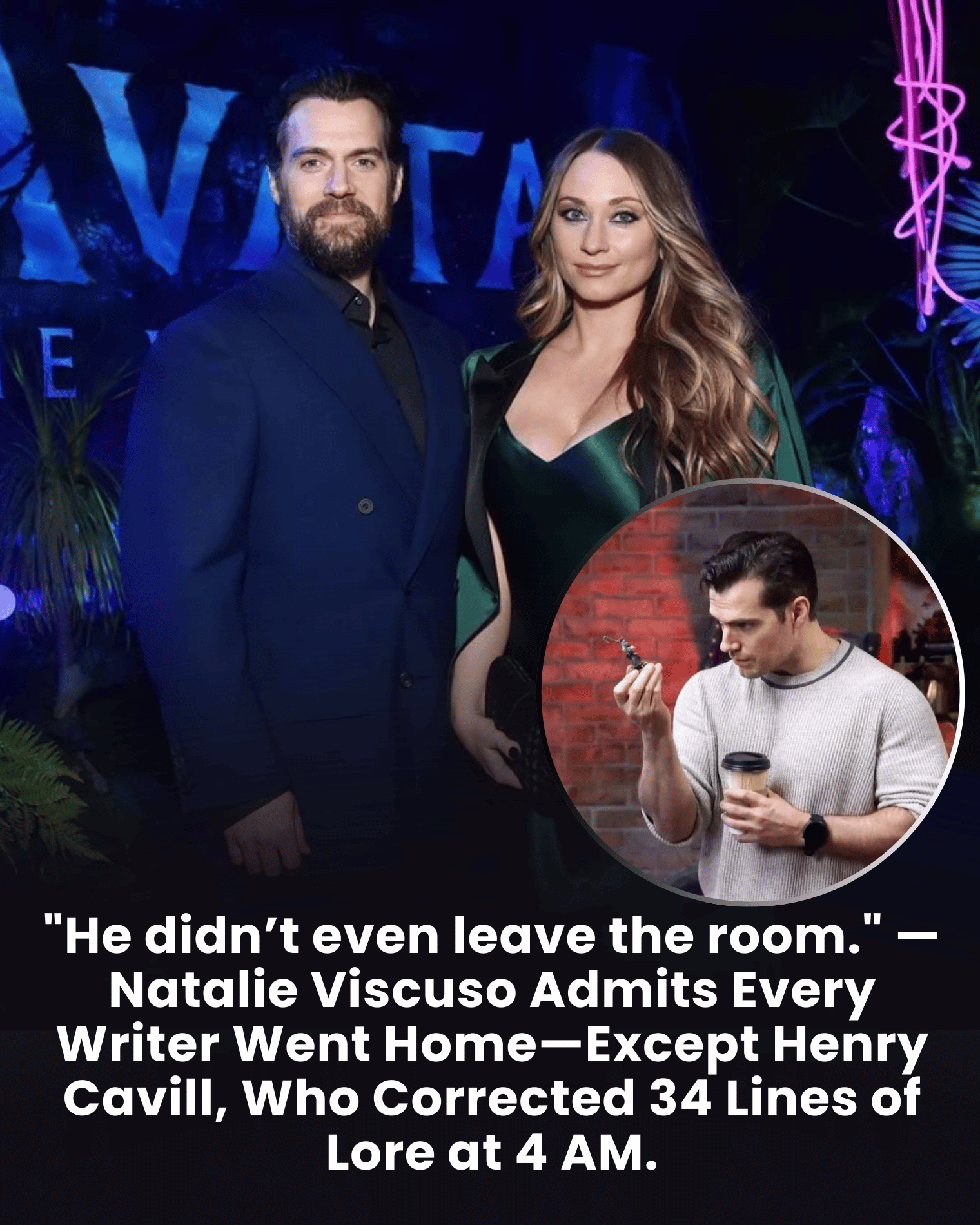
In an industry often driven by deadlines, budgets, and broad audience appeal, moments of obsessive dedication can stand out as something rare. According to Natalie Viscuso, one such moment unfolded quietly in the early hours of the morning, long before cameras began rolling on Amazon's ambitious adaptation of Warhammer 40,000. It wasn't a high-profile meeting or a major production decision—but it revealed exactly how seriously Henry Cavill approached the responsibility of bringing the beloved universe to life.
The project itself carried enormous expectations. With a reported budget in the range of $100 million, the pressure to deliver a compelling pilot episode was already intense. Writers had spent long days shaping the script, balancing accessibility for new audiences with authenticity for longtime fans. By all accounts, it had been an exhausting process, and eventually, the writing team called it a night.
Everyone left—except Cavill.
Viscuso recalled returning or checking in during the early hours—around 4 AM—only to find Cavill still there, immersed in a world most productions would only reference at a surface level. Surrounded by decades-old rulebooks, he wasn't casually skimming for inspiration. He was cross-referencing. Line by line. Detail by detail.
At one point, he had identified and corrected 34 separate lines in the script, each tied to lore accuracy. Some adjustments were subtle—terminology, weapon descriptions, historical nuances within the fictional universe. Others were more structural, ensuring that what appeared on screen would align with the internal logic that fans had followed for over 30 years.
For Cavill, this wasn't about perfectionism for its own sake. As Viscuso put it, "he lived in the world." That distinction matters. Many actors prepare for roles by learning lines or developing character backstories. Cavill's approach went further—he treated the source material not as inspiration, but as canon that demanded protection.
The significance of that mindset becomes clearer when considering the scale of Warhammer 40,000. It is not just a setting; it is a sprawling mythology built across decades of books, games, and fan engagement. Small inaccuracies can ripple outward, breaking immersion for a community that knows every faction, weapon, and historical reference in meticulous detail.
What makes this story compelling is the contrast between the production's financial scale and Cavill's personal priorities. While studios often focus on visual spectacle or mass appeal, his attention remained fixed on the integrity of the lore. The budget, the deadlines, even the expectations—none of that seemed to outweigh the importance of getting the details right.
Viscuso's account offers a glimpse into a different kind of creative investment—one rooted not in obligation, but in genuine passion. At 4 AM, with no audience and no immediate recognition, Cavill was doing the kind of work that rarely makes headlines but often defines the final product.
In the end, moments like this help explain why certain adaptations resonate more deeply than others. It's not just about scale or star power. It's about whether the people behind the project truly understand—and respect—the world they are bringing to life. And in that quiet, early-morning scene, Henry Cavill wasn't just preparing for a role. He was safeguarding a universe.