
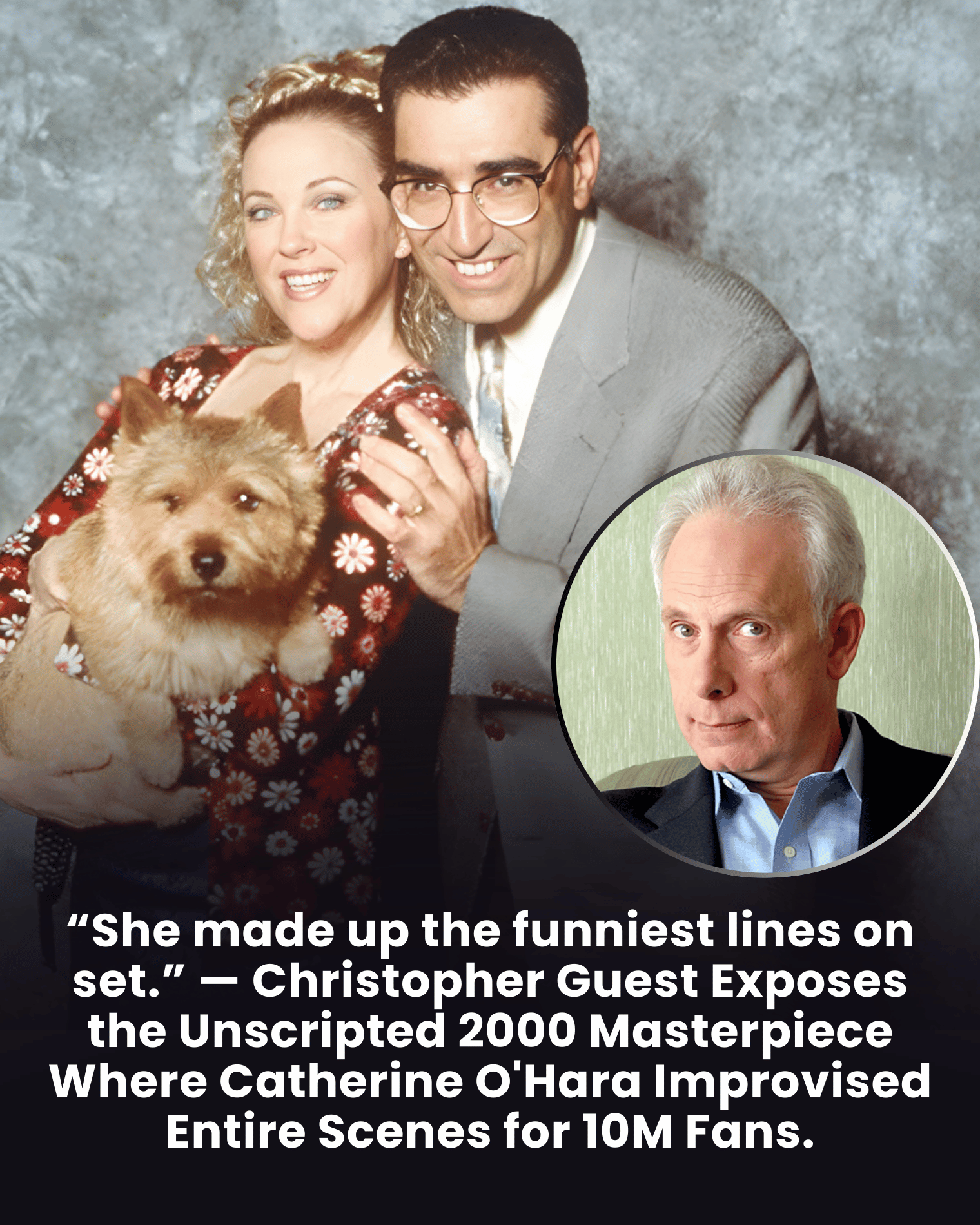
Christopher Guest has never been a filmmaker known for exaggerated praise, which is exactly why his admiration for Catherine O'Hara carries so much weight. In recalling the making of Best in Show, the director reportedly let his usually restrained manner slip just enough to make one thing unmistakably clear: O'Hara was operating on a level that left even her fellow cast members stunned. On a film built around improvisation, sharp instincts, and total commitment to absurdity, she still managed to stand apart.
That is what makes Best in Show such a fascinating comedy landmark more than two decades later. Released in 2000, the mockumentary became an instant favorite among audiences who were drawn to its deadpan tone and lovingly ridiculous portrait of the competitive dog-show world. But beneath the polished chaos of the final film was an unusually risky creative process. Guest's method depended on giving actors only a loose structure, then trusting them to fill scenes with original dialogue, behavior, and comic rhythm. In the wrong hands, that approach could have collapsed into self-indulgence. With Catherine O'Hara, it became magic.
Guest's recollection of her work on set paints the picture of an actress who did far more than simply "be funny." According to the story, he would offer her the barest prompt, sometimes no more than a few words, and she would instantly generate a complete comic universe. One moment in particular seemed to stay with him: O'Hara locking into character and delivering a long, seamless monologue about a dog that did not even exist in the script. What makes that image so striking is not just the invention itself, but the control behind it. Improvisation at that level is not random. It requires total confidence, deep character understanding, and an instinct for exactly how far to push a scene before it breaks.
That quality defined O'Hara's performance as Cookie Fleck, the flamboyant, emotionally tangled dog owner whose every interaction feels both ludicrous and oddly believable. She did not play the character as a sketch. She played her as someone who fully existed, complete with contradictions, vanity, insecurity, and bizarre emotional logic. That is why the jokes land so hard. O'Hara never appears to be chasing laughs. She simply commits, and the comedy explodes naturally around her.
Guest's praise also reveals something important about ensemble comedy. In an improvisational film, one actor performing at a brilliant level changes the pressure in the room for everyone else. If O'Hara was constantly generating fresh, fearless material, the rest of the cast had no choice but to rise with her. That kind of energy becomes contagious. It sharpens reactions, deepens chemistry, and gives the finished film its unpredictable spark.
For many fans, Best in Show remains one of the funniest comedies of its era because it feels alive in a way heavily scripted films often do not. And at the center of that energy is Catherine O'Hara, whose improvisational brilliance apparently turned loose prompts into unforgettable scenes. If Christopher Guest is still marveling at it, that says everything.